Soil Regeneration in India: Projects for Climate-Resilient Farming in India
Restoring Soil Health | Strengthening Water Security | Stabilising Farm Yields
Soil degradation, declining water availability, and rising input costs are major challenges facing agriculture in Tamil Nadu and South India. Addressing these issues requires a shift from input-intensive farming to science-driven soil regeneration.
Cybrids Agro Biotech Private Limited is an integrated agri-biotechnology company delivering soil regeneration and climate-resilient farming projects across South India, with a strong operational focus on Tamil Nadu, Andhra Pradesh, Telangana, Karnataka, and Kerala.
Integrated Soil Regeneration Solutions for South Indian Agriculture
We partner directly with:
- Farmers and progressive growers
- Farmer Producer Organizations (FPOs)
- Contract farming and agri-enterprises
- Institutional investors, CSR programs, and landowners
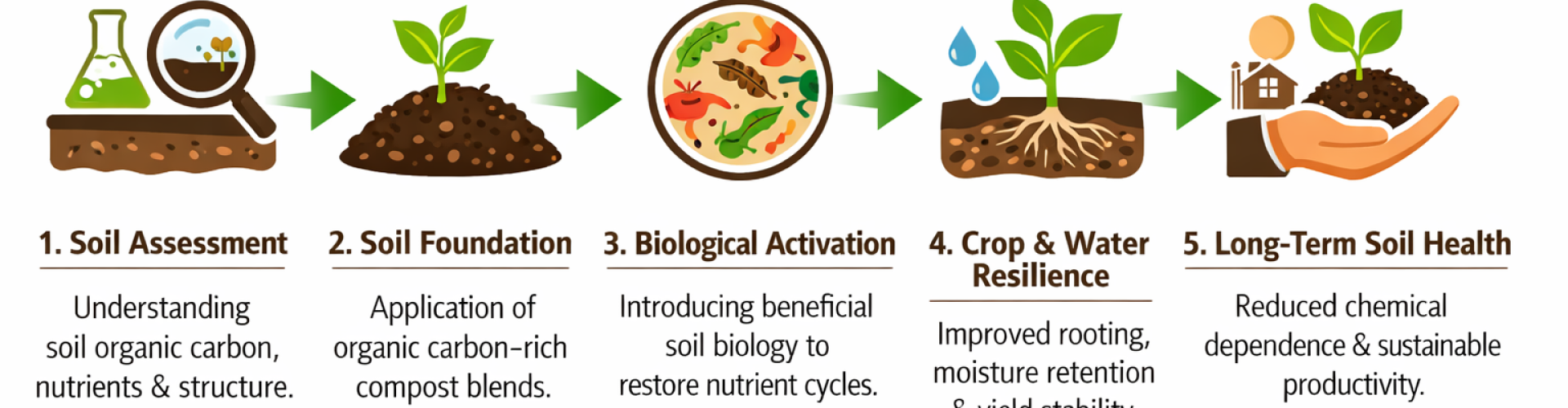
Our projects are designed to rehabilitate degraded soils, enhance soil organic carbon, and improve water-holding capacity, enabling farms to perform sustainably under variable climatic conditions.
What Our Soil Regeneration Projects Deliver
 Improved soil structure and biological activity
Enhanced moisture retention for drought-prone regions
Reduced dependence on chemical fertilizers and inputs
Stabilised yields under climate stress
Long-term improvement in farm profitability and land value
These outcomes are especially critical for rainfed and semi-arid regions of South India, where soil health directly determines crop success.
Our Approach: Soil Biology–First Farming
Our approach combines soil microbiology, bio-based inputs, and field-level implementation to regenerate soils rather than exhaust them.
Healthy soil is the foundation of profitable, climate-resilient, and sustainable farming.
By restoring soil function at the root level, we help farmers and institutions build long-term agricultural resilience, not short-term yield spikes.
The Soil Crisis in Indian Agriculture
Built for Tamil Nadu’s Soils & Climate Challenges
Indian agriculture is facing a deepening soil health crisis, with its impact felt most strongly in Tamil Nadu and South India, where semi-arid climates, water scarcity, and intensive cultivation place enormous stress on farmland.
Over the past few decades, productivity gains have often come at the cost of soil degradation, making farms increasingly vulnerable to climate variability and rising input costs.
Key Soil Challenges Facing Indian & Tamil Nadu Agriculture
Declining Soil Organic Carbon
Continuous cropping, residue removal, and limited organic inputs have reduced soil carbon levels, weakening soil structure and biological activity essential for nutrient cycling.
Excessive Dependence on Chemical Fertilizers
High chemical fertilizer use has led to nutrient imbalances, soil toxicity, and reduced microbial life—resulting in diminishing returns for farmers.
Poor Soil Structure & Low Water Retention
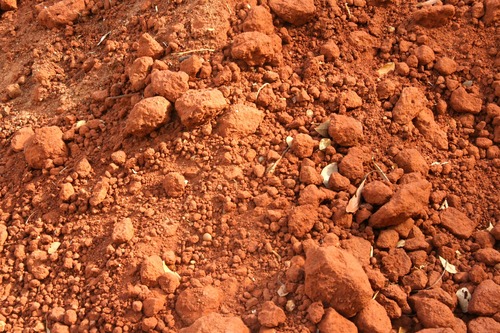
Degraded soils lose their ability to hold water, increasing irrigation demand and crop stress—especially critical in Tamil Nadu’s drought-prone regions.
Increasing Climate Stress
Frequent droughts, heat waves, and erratic monsoon patterns have intensified crop failures and yield volatility across South India.
Rising Input Costs & Unstable Yields
As soil health declines, farmers are forced to apply more inputs for lower returns, eroding profitability and long-term sustainability.
Without regenerating soil health, productivity gains remain short-lived and increasingly expensive.
How Cybrids Addresses the Root Cause
Cybrids Agro Biotech Private Limited addresses soil degradation at the foundation level—by restoring soil biology, structure, and organic carbon, rather than treating symptoms.
Our soil regeneration approach is specifically adapted to:
- Tamil Nadu’s soil types and climate
- Rainfed and irrigated farming systems
- Smallholder and large-scale agricultural operations
- By rebuilding soil as a living system, Cybrids enables:
- Improved water-holding capacity
- Enhanced nutrient efficiency
- Reduced chemical dependency
- Greater climate resilience
- More stable and predictable yields